

Latest

Surging interest in emerging market debt, several ratings upgrades and a weak dollar all suggest a possible repeat of last year’s strong returns. We reveal our outlook for 2026 along with our top country picks.

Floating rate notes can offer investors a way to stay ahead of interest rate swings – offering capital stability and attractive income opportunities when markets shift. Paired with other fixed income assets, they can help build resilient portfolios that balance yield, diversification and long-term performance.

As China welcomes the Year of the Horse on 17 February 2026, anticipation is building. The Horse, symbolizing strength, freedom, and speed, points to a year likely marked by vitality and dynamic change. Traditionally, the Year of the Horse is associated with progress and noteworthy achievements. It embodies traits such as optimism and resilience, suggesting individuals and businesses alike may take a bold and energetic approach to new opportunities as they arise.

Markets face a significant – but not yet destabilising – shock after the US and Israel launched strikes against Iranian military targets. The immediate implication is a repricing of tail risks with oil prices potentially rising, risk assets falling and safe haven assets benefitting, but much depends on whether the conflict spills into broader regional or domestic instability.
Artificial Intelligence (AI) has recently become the defining theme of global markets. From powering breakthroughs in natural language processing to enabling autonomous systems, AI is reshaping industries at an unprecedented pace. However, as valuations soar and capex surges, concerns about an “AI bubble” dominate many investor conversations. So are we witnessing another dot-com moment? Our view is that short-term volatility is inevitable, but the long-term potential of AI remains vastly underappreciated.
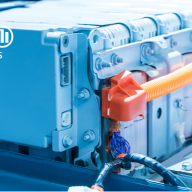
Investors are increasingly aware of China’s growing dominance in electric vehicles (EVs). BYD cars are now commonly seen on the streets of Europe and Latin America. Yet while the headlines often focus on the volume of EV sales, the story of China’s rise to global leadership lies in large part “beneath the hood” – making the right bet on batteries.
As we enter a new year, an investment landscape is emerging that requires a combination of vigilance and ambition. The US – long a crucial engine of global growth – faces institutional challenges and potentially stretched asset valuations. While AI-related stocks remain an essential part of portfolios, investors should be selective to mitigate the risks of any fallout. In this environment, Europe, China and India may offer broader, more diversified and attractively priced opportunities.
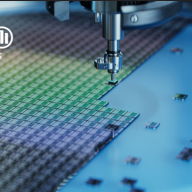
As the global economy navigates macroeconomic and geopolitical landscapes that remain complex and uncertain, the Asian technology sector continues to innovate and grow. From the tech hubs of China, Taiwan, South Korea, and Japan to those rapidly digitizing economies currently playing catch-up, the region is set to potentially benefit from structural tailwinds, driven by artificial intelligence (AI) adoption, advances in semiconductors, and the ongoing global digital transformation.

In the first in a series on the new key components of a diversified multi asset portfolio, we explore how global uncertainty is breathing new life into one of the oldest financial assets: gold. Why is gold becoming an essential element of multi asset portfolios and a powerful tool for diversification?

Building on recent political and market shifts, our 2026 themes explore sustainability challenges and industry-wide trends that now shape financial decision-making. The key takeaway for 2026? A new era of pragmatism is emerging – building on the recent shift towards viewing sustainability as both a near-term and long-term resilience strategy, alongside growing awareness of the costs of misjudging environmental, social and governance factors. We expect this trend to accelerate throughout 2026, particularly in the following interconnected themes:

Floating rate notes can offer investors a way to stay ahead of interest rate swings – offering capital stability and attractive income opportunities when markets shift. Paired with other fixed income assets, they can help build resilient portfolios that balance yield, diversification and long-term performance.